

Sitka, Alaska, is a small coastal town with a big story to tell. It’s one of the few places in North America where Russian history and Native Tlingit culture come together in fascinating ways. Walking through Sitka feels like stepping into a living museum — where every church, hill, and building whispers stories from the past.
Among Sitka’s most famous landmarks are St. Michael’s Russian Orthodox Cathedral, the Russian Bishop’s House, and Baranof Castle Hill. These sites aren’t just old buildings; they are windows into the time when Alaska was part of the Russian Empire. They tell how religion, culture, and politics shaped the land — and how Sitka later became part of the United States.
Whether you love history, architecture, or just enjoy exploring unique places, Sitka’s Russian heritage sites offer a rare chance to see how different worlds — Russian, Tlingit, and American — came together to create something truly special.
History: The Russian Era in Sitka
Sitka was once called New Archangel during the Russian colonial period. Russians settled here in the late 18th and early 19th centuries.
The Russian Orthodox Church played a central role in Russian colonial life — not only in religion, but also in education, culture, and administration.
In 1867, Russia formally sold Alaska to the United States. This event is directly connected with Baranof Castle Hill, where a formal flag-raising ceremony took place.
Key Sites & What Makes Them Special
1. St. Michael’s Russian Orthodox Cathedral
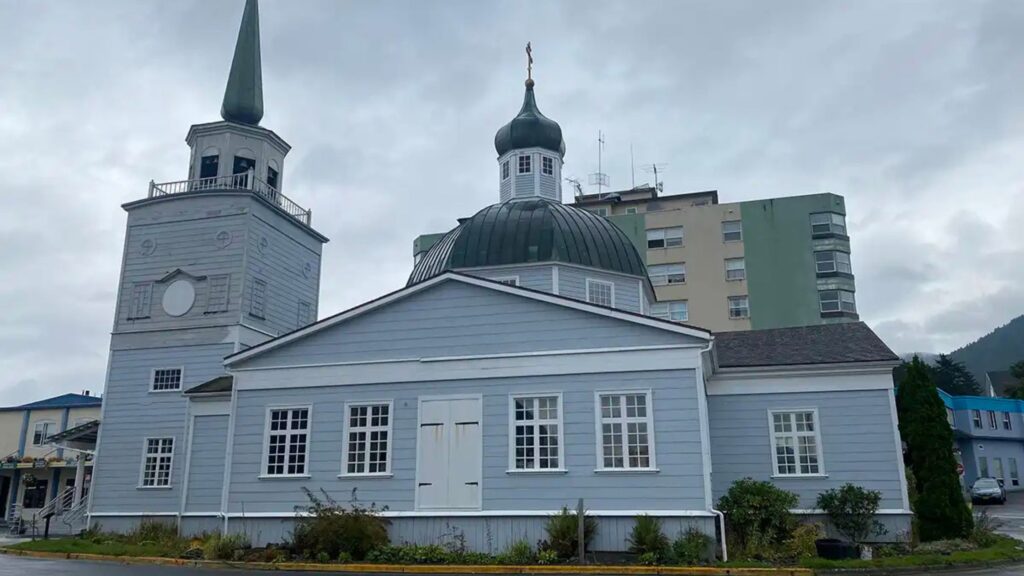
What it is:
One of the earliest and most important Russian Orthodox churches in North America.
The original cathedral was built between 1844–1848, designed by Bishop Innocent (Ivan Veniaminov), with funding help from the Russian America Company.
Architecture & Art:
Traditional Russian Orthodox church features include onion domes, a cruciform plan (shape of a cross), and a bell tower.
Built using local materials (like spruce logs) combined with traditional Russian design, the cathedral was destroyed by fire in 1966. It was rebuilt using the original 1840s plans, with modern materials like steel and concrete for safety, while preserving its authentic Russian style.
Religious / Cultural Significance:
The cathedral was, from 1840 to 1872, the seat of the Russian Orthodox Diocese for all of North America. After 1872, it continued as the seat of the Diocese of Alaska.
Many sacred icons, liturgical art, books, and furniture survived the 1966 fire thanks to parishioners who rushed to save them.
Visiting Info:
Located in downtown Sitka at 240 Lincoln Street, the cathedral welcomes both worshippers and visitors.
Visiting hours for tourists are typically 10 a.m. – 3 p.m., though it’s best to check ahead for any special services or closures.
2.Russian Bishop’s House
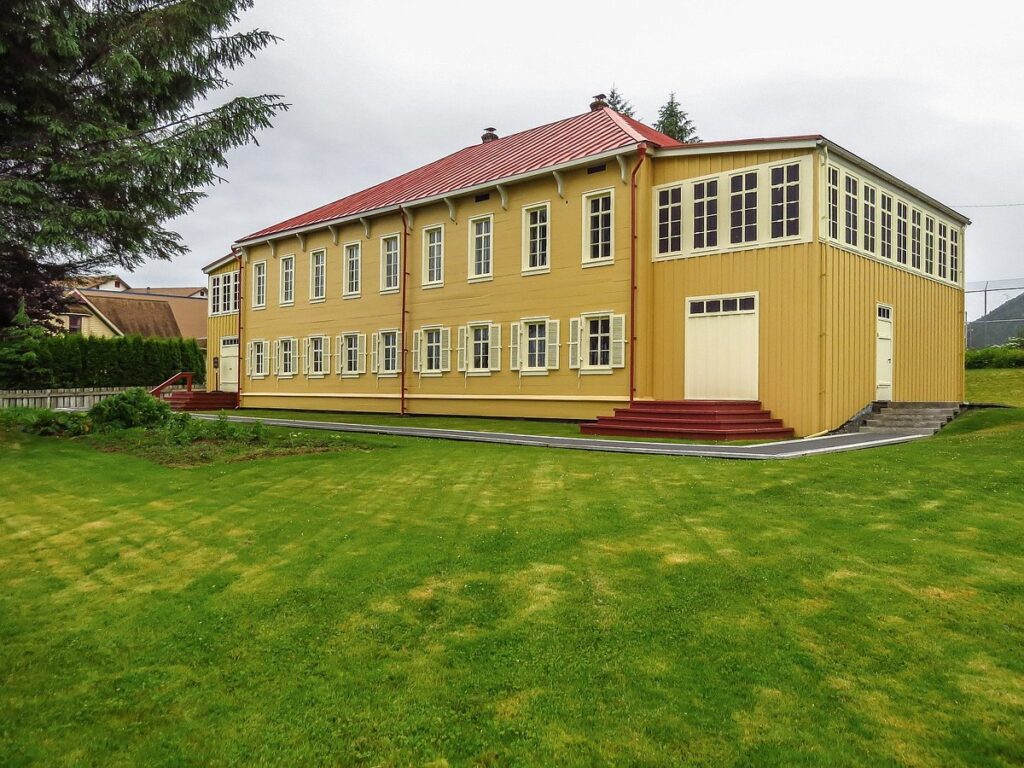
What it is:
Also called the “Russian Mission Orphanage” historically, this two-story log structure was built between 1841–1843 by Finnish carpenters under Russian supervision.
Role in History:
The Russian Bishop’s House served as the home and administrative center of Bishop Ivan Veniaminov (Saint Innocent), the first Bishop of Alaska. He was a missionary, linguist, and scholar who worked to bridge cultures between the Russians and native peoples.
The building also functioned as a school, missionary headquarters, and orphanage.
Architecture / Preservation:
The house features a sturdy two-story log structure with extensions on both sides for storage and staircases. Over the years, it was altered, restored, and carefully preserved.
A major restoration project began in 1973 to return the building to its mid-19th-century appearance while discreetly adding modern systems for safety and comfort.
What Visitors Can Do:
The first floor is now a museum with exhibits, artifacts, and some original furnishings. Free or low-cost tours are available, often led by rangers.
The second floor, which includes the Bishop’s living quarters and a private chapel, is accessible only by guided tour.
The Russian Bishop’s House is located at 501 Lincoln Street, within walking distance from Sitka’s main attractions and waterfront.
3. Baranof Castle Hill (Baranof Castle State Historic Site / “Castle Hill”)
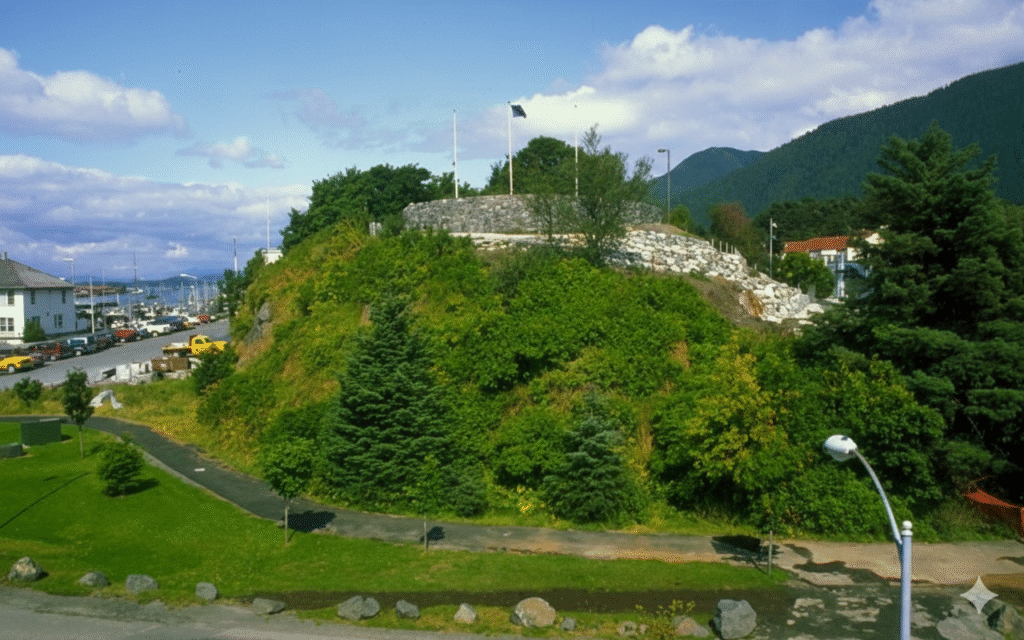
What it is:
A scenic hill overlooking Sitka Harbor, Castle Hill holds centuries of history — from the native Tlingit people to the Russian colonial period and finally the U.S. era.
Historical Importance:
Before Russian arrival, the Kiksadi clan of the Tlingit lived here and built a fortification known as Noow Tlein.
The Russian American Company later used this site as its central administrative and business headquarters from around 1804 to 1867.
On October 18, 1867, the official transfer of Alaska from Russia to the United States took place here, symbolized by the raising of the U.S. flag.
What to See & Do There:
A walking path and accessible walkway lead to the top of the hill, offering panoramic views of Sitka’s town, waterfront, and harbor.
Interpretive panels along the route explain the area’s Tlingit, Russian, and American histories.
Why These Sites Matter (Cultural & Tourist Significance)
These heritage sites preserve Russian colonial architecture and Orthodox religious art, which are rare in North America.
They tell a layered story of transition — from Tlingit (native) culture, to Russian colonial rule, and finally to U.S. governance — making Sitka a remarkable destination to experience Alaska’s diverse history.
They are also living sites, not just museums. St. Michael’s remains an active Orthodox church with regular services, connecting the past with the present.
What to See Closely / Hidden Gems
- Inside St. Michael’s: Admire the iconostasis (wall of icons), rare religious artwork, and the revered Sitka Icon of the Mother of God, all beautifully restored.
- In the Bishop’s House: Explore the private chapel, 1850s-style living quarters, and exhibits featuring Bishop Innocent’s missionary work.
- On Castle Hill: Enjoy breathtaking views and read the interpretive panels that tell stories of the Tlingit fort, the Russian American Company, and the 1867 flag-raising ceremony.
Practical Tips for Visitors
- Best Time to Visit: Summer months (June–August) offer milder weather and full access to tours and exhibits. Some sites have limited hours in winter.
- Time Budget: Plan about 1–2 hours for St. Michael’s Cathedral, 30–60 minutes at the Bishop’s House, and 30 minutes to explore Castle Hill.
- Guided Tours: Ranger-led or local guided tours provide deeper insight into Sitka’s Russian heritage and are highly recommended.
- Accessibility: The Bishop’s House first floor is wheelchair-accessible; the second floor is not. Castle Hill features accessible walkways.
- Respectful Visiting: These are sacred and historic places. Be quiet during services, dress modestly, and avoid flash photography inside the cathedral.
Why You Should Visit
Visiting these Russian heritage sites in Sitka offers a glimpse into Alaska’s past like nowhere else. The blend of Orthodox spirituality, Russian colonial architecture, and Native Alaskan culture creates a one-of-a-kind experience for travelers.
Whether you’re strolling through the cathedral’s domes, exploring the Bishop’s House, or standing atop Castle Hill, you’re walking through living history.